
865+ Five-Star Reviews - (623) 226-4454




FAQ Section
Trustworthy
Quality Focused
Financing Available
Locally Owned
Phoenix's #1 Trusted
Pool professionals
WHERE EXCELLENCE IN POOLS MEETS UNPARALLELED SERVICE
Trustworthy
Locally Owned
Quality Focused
Financing Available
COMMON QUESTIONS
How long has Triton Been Around?
We've been around for over 10 years. We have been in the service industry in the Phoenix Valley for over 25 years and counting. We strive to provide the best quality service to all customers in the Phoenix Metro area and our reviews show just that. Reputation is our #1 priority and we want to make sure we provide the best service with the best warranty.

What makes Triton different?
Triton makes things different by trying to put the customer first, meaning we've done things with you in mind. For example one of those things being equipment pricing, we've outsourced our own Pumps, & Salt Cells to ensure we give you the best possible product with the best warranty in the industry.
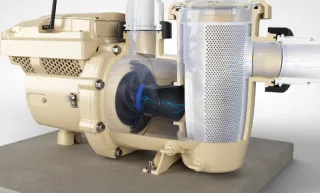
How often should I have my pool equipment looked at?
Getting your pool equipment look at regularly is the equivalent of getting an oil change. We recommend getting your pool equipment tuned up and inspected once a year usually before summer or during the winter months.
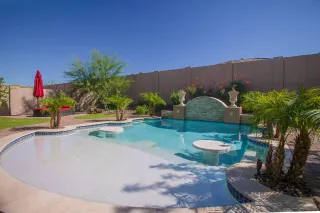
Why is my pool pump making strange noises?
Strange noises from your pool pump can indicate various issues, such as worn-out bearings, debris stuck in the impeller, or air leaks in the suction line. It's essential to address these issues promptly to prevent further damage and maintain optimal pump performance.
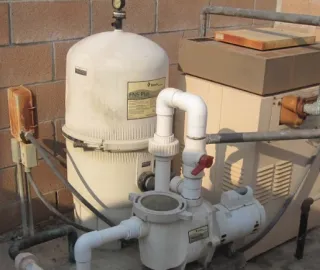
How often should I run my pool pump?
The recommended runtime for a pool pump depends on factors such as pool size, bather load, and climate. As a general rule, running the pump for 8-12 hours per day during the swimming season helps maintain proper circulation and filtration.
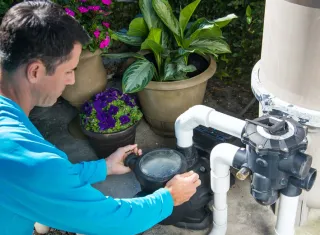
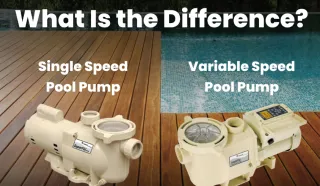
What is the difference between a single-speed and a variable-speed pool pump?
Single-speed pumps operate at a fixed speed, while variable-speed pumps allow you to adjust the speed to match your pool's needs. Variable-speed pumps offer greater energy efficiency and quieter operation, making them a popular choice for pool owners looking to reduce energy costs.
How can I troubleshoot common pool pump problems?
Common pool pump problems such as low flow, leaks, or priming issues can often be resolved through simple troubleshooting steps like checking for clogs, inspecting seals and gaskets, and ensuring proper water level. If troubleshooting doesn't resolve the issue, it's best to consult with a professional pool technician for further assistance.

INFORMATIONAL ARTICLES
What Size Pool Heater Do You Need?
Picking the wrong size pool heater is one of the most common and costly mistakes pool owners make. Go too small, and your water never gets warm enough. Go too large, and you're burning money on energy you don't need.
So how do you figure out the right fit? It comes down to a few key measurements and a basic understanding of how heat transfer works.
Start With the Basics: Surface Area and Volume
The two most important factors when sizing a pool heater are the surface area and the volume of your swimming pool. Surface area determines how much heat is lost to the air, wind, and humidity. Volume tells you how many British thermal units (BTUs) are needed to raise the water temperature to your desired level.
To find the surface area, multiply the length by the width of your pool. For volume, multiply length x width x average depth x 7.5 to get gallons.
Understanding BTUs and Why They Matter
A British thermal unit is the standard measurement used to rate heating power. The more BTUs a heater produces, the faster it can raise your water temperature.
A general rule of thumb: you need roughly 50,000 BTUs per 10,000 gallons of water to achieve an efficient heat rise. That said, factors like shade, wind exposure, and whether you use a pool cover all affect the final number.
Gas Heater vs. Heat Pump: Which Should You Size Differently?
Yes, and here's why it matters.
A gas heater - whether natural gas or propane - heats water quickly and performs well regardless of air temperature. It pulls fuel from your gas meter and burns it to transfer heat directly. These are sized primarily by BTU output.
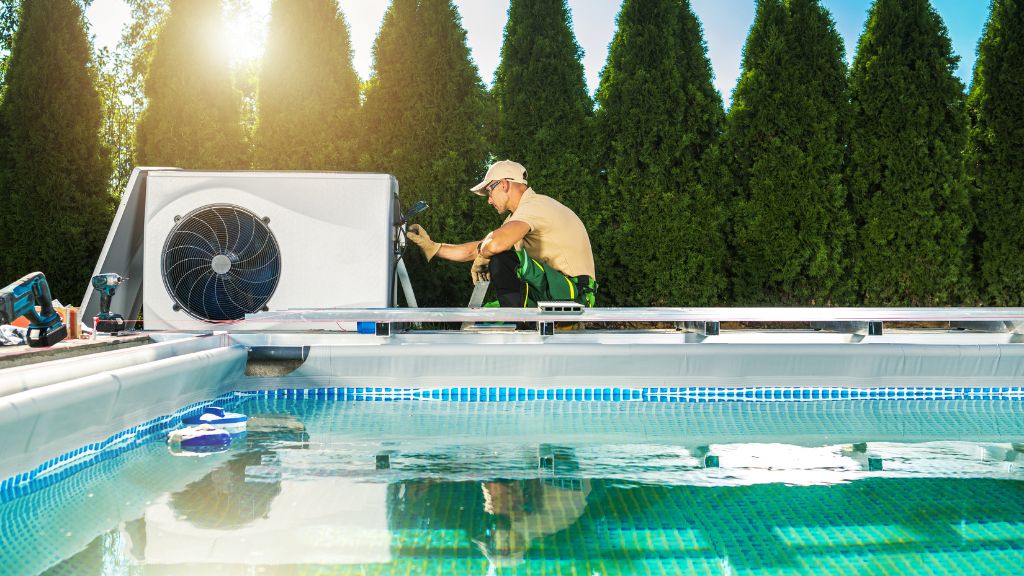
A heat pump works differently. It pulls heat from the surrounding air using a compressor, similar to how heating, ventilation, and air conditioning systems work. Brands like Pentair and AquaComfort (part of the AquaComfort Water Group, also known as Aqua Comfort Solutions) rate their units by coefficient of performance (COP) and energy conversion efficiency rather than raw BTUs. Heat pumps are more efficient over time but heat water more slowly, making sizing even more critical in cooler months.
Quick Sizing Reference
Up to 10,000 gallons: 75,000 - 100,000 BTU gas heater or an 85,000 BTU heat pump
10,000 to 20,000 gallons: 150,000 BTU gas heater or a 110,000 BTU heat pump
20,000+ gallons or a hot tub combo: 200,000+ BTU gas heater or a high-efficiency heat pump
These are starting points, not final answers. Your specific pool shape, local conditions in Phoenix, and desired temperature all shift the math.
Don't Forget Efficiency and Running Costs
A bigger heater is not always better. Oversized units cycle on and off too frequently, which wears down the pump and compressor faster and drives up your cost over time.
Energy conversion efficiency matters just as much as raw output. A well-matched heater running consistently will always outperform an oversized unit that short-cycles.
Choose the Right Pool Heater Size for Your Pool
Getting your pool heater size right means looking at surface area, water volume, BTU output, and how you plan to use your pool. Whether you're leaning toward a gas heater or a heat pump, the right fit saves you money and keeps your water comfortable all season. If you're unsure where to start or need a professional evaluation, reach out to Triton Pools at 623-226-4454 - our certified technicians are ready to help you choose and install the right system through our pool heater services.

wHERE WE SERVICE
SERVING PHOENIX METRO ARIZONA

Apache Junction
San Tan Valley

Connect With Us


