
865+ Five-Star Reviews - (623) 226-4454




FAQ Section
Trustworthy
Quality Focused
Financing Available
Locally Owned
Phoenix's #1 Trusted
Pool professionals
WHERE EXCELLENCE IN POOLS MEETS UNPARALLELED SERVICE
Trustworthy
Locally Owned
Quality Focused
Financing Available
COMMON QUESTIONS
How long has Triton Been Around?
We've been around for over 10 years. We have been in the service industry in the Phoenix Valley for over 25 years and counting. We strive to provide the best quality service to all customers in the Phoenix Metro area and our reviews show just that. Reputation is our #1 priority and we want to make sure we provide the best service with the best warranty.

What makes Triton different?
Triton makes things different by trying to put the customer first, meaning we've done things with you in mind. For example one of those things being equipment pricing, we've outsourced our own Pumps, & Salt Cells to ensure we give you the best possible product with the best warranty in the industry.
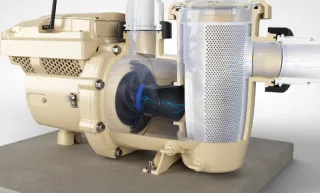
How often should I have my pool equipment looked at?
Getting your pool equipment look at regularly is the equivalent of getting an oil change. We recommend getting your pool equipment tuned up and inspected once a year usually before summer or during the winter months.
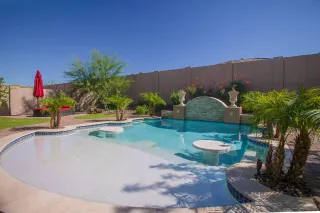
Why is my pool pump making strange noises?
Strange noises from your pool pump can indicate various issues, such as worn-out bearings, debris stuck in the impeller, or air leaks in the suction line. It's essential to address these issues promptly to prevent further damage and maintain optimal pump performance.
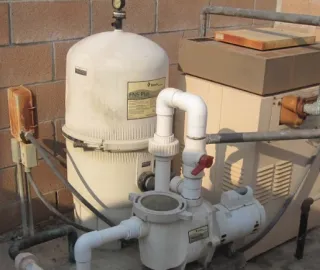
How often should I run my pool pump?
The recommended runtime for a pool pump depends on factors such as pool size, bather load, and climate. As a general rule, running the pump for 8-12 hours per day during the swimming season helps maintain proper circulation and filtration.
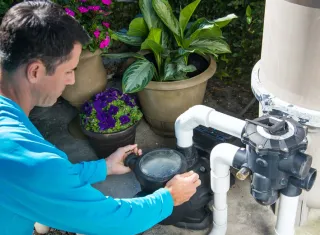
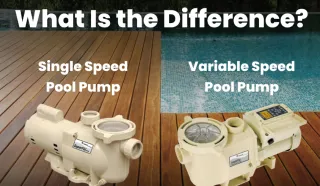
What is the difference between a single-speed and a variable-speed pool pump?
Single-speed pumps operate at a fixed speed, while variable-speed pumps allow you to adjust the speed to match your pool's needs. Variable-speed pumps offer greater energy efficiency and quieter operation, making them a popular choice for pool owners looking to reduce energy costs.
How can I troubleshoot common pool pump problems?
Common pool pump problems such as low flow, leaks, or priming issues can often be resolved through simple troubleshooting steps like checking for clogs, inspecting seals and gaskets, and ensuring proper water level. If troubleshooting doesn't resolve the issue, it's best to consult with a professional pool technician for further assistance.
INFORMATIONAL ARTICLES
Pool Filter Pressure Too High? What's Clogging It
If your pool filter pressure gauge is creeping into the red zone, something is off. High pressure in your pool's filtration system is one of those problems that is easy to ignore but expensive to overlook. Left unchecked, it can strain your pump, damage your filter, and leave your water looking cloudy even after hours of running.
The good news? High filter pressure almost always has a clear cause, and most of them are fixable.
What Is "Normal" Pool Filter Pressure?
Pool filter pressure is measured in PSI, or pounds per square inch. Every pool system is a little different, but most residential filters run between 10 and 20 PSI under normal operating conditions.
Your baseline pressure is what matters most. When you install a new filter or clean an existing one, take note of the PSI at that moment. That number becomes your reference point. If your gauge reads 8 to 10 PSI higher than your baseline, your filter is telling you something needs attention.
Common Reasons Your Pool Filter Pressure Is Too High
A Dirty or Clogged Filter
This is the most common culprit by far. Whether you have a sand filter, a cartridge filter, or a diatomaceous earth (DE) filter, debris accumulates over time. Leaves, dirt, body oils, sunscreen, and even algae build up inside the filtration media and restrict water flow.
When water cannot pass through freely, back pressure builds inside the tank, and your gauge climbs. For cartridge filters, this usually means it is time to remove and rinse the cartridge. For sand filters, backwashing is typically the solution - a process that reverses water flow through the filter to flush out trapped debris.
Algae or Algal Bloom Clogging the System
A green pool is not just an eyesore. When algae or an algal bloom takes hold, it can push a massive amount of organic material through your suction lines and into your filter. This clogs the filtration media faster than normal debris and can spike your pressure significantly.
If you have treated your pool for algae and your pressure is still high after cleaning the filter, the system may need a deep clean or even an acid wash to fully reset.
A Closed or Partially Closed Return Valve
Sometimes the fix is simpler than you think. A valve on the return side of your plumbing that is partially closed creates resistance in the system. That resistance is felt as elevated pressure on the filter gauge.
Walk your equipment pad and check every valve position. All return-side valves should be fully open during normal filtration. If one was accidentally bumped or left partially shut after a repair, that could be your entire problem.
Issues With the Pump or Impeller
Your pool pump pushes water through the system under pressure. If the impeller - the spinning component inside the pump that drives water movement - is oversized for your filter or running faster than the system was designed for, pressure will be abnormally high.
Variable speed pumps set to a speed that is too high for the plumbing and filter can also cause this issue. If you recently upgraded your pump or changed its settings, that may be where the problem started.
A Failing or Worn Pressure Gauge
Do not overlook the obvious. Sometimes the gauge itself is the problem. Pool pressure gauges are exposed to chemicals, heat, and constant pressure measurement cycling. They can fail and give false readings over time.
If everything else checks out - the filter is clean, valves are open, there is no algae in sight - try replacing the gauge. They are inexpensive and easy to swap out. A faulty gauge reading high does not mean your system is actually under high pressure.
A Bad O-Ring or Air Leak on the Suction Side
This one is a little counterintuitive. An air leak on the suction side of your pump can disrupt flow patterns in a way that affects pressure readings. A worn or cracked O-ring on the pump lid or filter housing can allow air to enter the system.
When air enters the suction line, the pump loses some of its prime, which affects how consistently it moves water. This can cause erratic pressure behavior, including spikes that look like high pressure on the gauge.
How to Fix High Pool Filter Pressure
Start with backwashing or cleaning the filter. This solves the majority of high-pressure cases. For a sand filter, run the backwash cycle until the water in the sight glass runs clear. For a cartridge filter, remove the cartridge, rinse it thoroughly with a garden hose, and inspect it for tears or worn-out media. Brands like Unicel make quality replacement cartridges if yours is past its prime.
Check all your valves. Make sure every return-side valve is fully open. It takes about 30 seconds and costs nothing.
Inspect your O-rings and seals. Look for cracking, swelling, or flattening. A bad O-ring is a cheap fix that can save a lot of headaches.
Test your pump settings. If you have a variable speed pump, lower the RPM and see if pressure drops to a normal range. If it does, your system may need some rebalancing.
Replace the pressure gauge. If you suspect a faulty reading, swap the gauge first before assuming anything more serious is wrong.
Call a professional if pressure stays high. If you have done all of the above and your PSI is still elevated, there may be a deeper plumbing issue, a pump problem, or a filter that needs replacing.
What to Do When Pool Filter Pressure Is Too High
Not every high-pressure situation is a DIY fix. If you are backwashing regularly and your pressure climbs back to dangerous levels within days, your filter may be undersized for your pool's volume. If the issue is tied to a pump problem, impeller damage, or a plumbing blockage you cannot locate, a certified technician can diagnose it quickly.
Triton Pools offers professional pool filter services to handle exactly these situations, from routine cleanings to full filter replacements.
Conclusion
High pool filter pressure is your system sending a clear signal that something needs attention.
Start with the simple fixes - clean the filter, check the valves, inspect the O-rings, and test the gauge. Most of the time, one of those steps solves the problem. If the pressure stays elevated after working through the checklist, do not wait for the issue to escalate. Contact Triton Pools at 623-226-4454 to schedule a filter inspection and get your system running the way it should.

wHERE WE SERVICE
SERVING PHOENIX METRO ARIZONA
Apache Junction
San Tan Valley

Connect With Us


