1,000+ Five-Star Reviews - (623) 226-4454




Pool Maintenance Services in Phoenix, AZ
Trustworthy
Quality Focused
Financing Available
Locally Owned
How to Get Rid of Black Algae in Your Pool
If you have ever spotted dark, stubborn spots clinging to the walls or floor of your swimming pool, you already know how frustrating black algae can be. Unlike green algae that floats freely in the water, black algae digs in deep and holds on tight. Getting rid of it takes more than a quick shock treatment and a prayer.
This guide walks you through exactly what black algae is, why it is so hard to eliminate, and what actually works to get your pool clean and clear again.
What Is Black Algae and Why Is It So Hard to Kill?
Black algae is not technically algae in the traditional sense. It is a form of cyanobacteria - a type of bacteria that behaves like algae and produces chlorophyll. As a member of the cyanobacteria family, it can generate cyanotoxins, which is one reason you want it out of your pool as quickly as possible.
What makes it particularly stubborn is its biology. Each cell forms in protective layers, with a hard outer shell that resists chlorine and other chemicals. The roots, called holdfasts, anchor themselves into the plaster, grout, or even the sand beneath your pool's surface. Standard shock treatments often kill the outer layer but leave the deeper cells untouched.
In Phoenix, Arizona, pools that sit under intense sun for most of the year, black algae can thrive if the water chemistry is even slightly off. High temperatures combined with organic matter like leaves and debris create ideal conditions for an algal bloom to take hold.
How to Identify Black Algae in Your Pool
Black algae typically shows up as dark blue-green or black spots, often on the shaded sides of pool walls. The spots are raised and slightly bumpy to the touch, unlike the slippery film that green algae leaves behind.
You will most often find it along tile grout lines, in cracks, and on rough plaster surfaces. It can also appear on pool equipment, steps, and in corners where circulation is low. If you spot it early, it is much easier to treat before it spreads into a full algal bloom.
Step-by-Step: How to Get Rid of Black Algae in Your Pool
Step 1 - Test and Balance Your Water Chemistry
Before you add any treatment, check your water chemistry. Your pH should be between 7.4 and 7.6, and your alkalinity should fall in the 80 to 120 ppm range. Balanced water allows chlorine and other substances to work more effectively.
If your pH or alkalinity is off, the chemistry of your treatment products will not perform the way they are supposed to. Fix the balance first, then move forward.
Step 2 - Brush the Affected Areas Aggressively
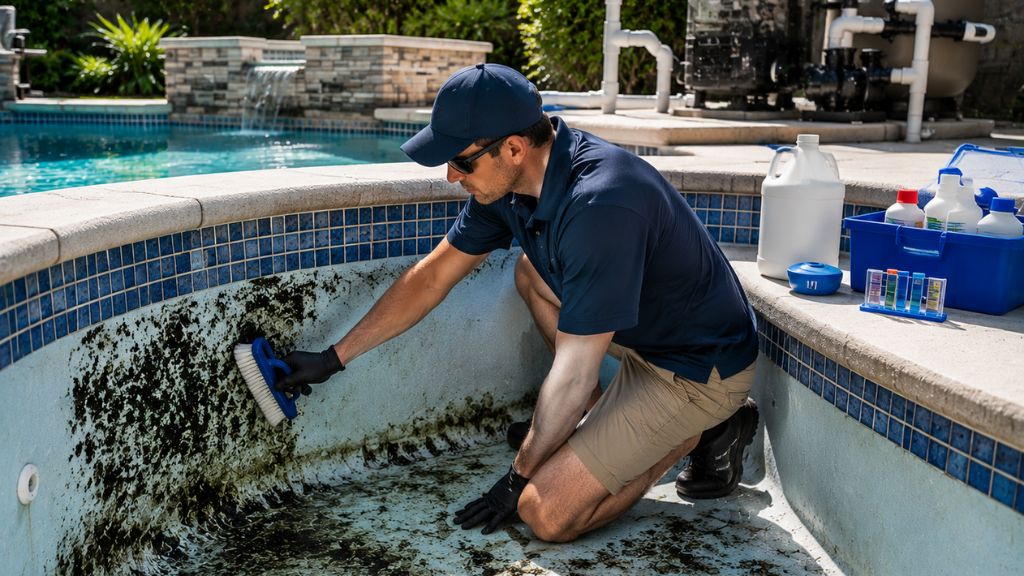
This step is critical and often skipped. Use a stiff-bristled brush, ideally one with stainless steel or nylon bristles, to scrub the black spots directly. You are trying to break through that protective outer layer so that chemicals can penetrate the deeper cells.
Do not use a soft brush here. An automated pool cleaner will not do this job either, since it cannot apply the targeted pressure needed. Manual brushing is the only way to crack the surface of black algae's defenses. A stainless steel brush works well on plaster, while a nylon brush is safer for vinyl and fiberglass surfaces.
Step 3 - Apply Chlorine Directly to the Spots
After brushing, apply chlorine directly to the affected areas while the pool pump is off. Granular calcium hypochlorite works particularly well for this because it sinks and stays in contact with the algae rather than dispersing immediately. Calcium hypochlorite is a hypochlorite-based compound that delivers a concentrated dose of sanitizing power right where you need it.
You can also use a trichlor tablet and rub it directly against stubborn spots. The direct contact gives the chlorine a better chance of penetrating the remaining cell layers.
Step 4 - Shock Your Entire Pool
Once you have treated the spots directly, shock the entire body of water. Use a high-dose chlorine shock, such as calcium hypochlorite, to raise your free chlorine level to at least 30 ppm.
This aggressive approach helps kill any spores that may be floating in the water before they reattach to surfaces.
Run your pool pump and filter continuously during this process. If you have a sand filter, backwash it thoroughly after treatment. The filter is the last line of defense against anything the brush and shock have dislodged.
Step 5 - Add an Algaecide
After shocking, add a quality algaecide formulated for black algae. Look for products that contain copper, such as copper-based algaecides or those marketed as copper pesticide formulas. Copper is effective against cyanobacteria and helps address the biological structure that makes black algae so resistant.
Some algaecides use quaternary ammonium cation compounds, which are effective against many algae types and are a common active ingredient in pool cleaner products. These can help break down residual organic matter and prevent regrowth.
Avoid adding algaecide and bleach at the same time, as mixing these substances can reduce their effectiveness or create unwanted chemical reactions.
Step 6 - Brush Again, Then Vacuum
Give the pool 24 to 48 hours after treatment, then brush all surfaces again. Follow up with a thorough vacuum to remove any dead algae and debris from the pool floor. A manual vacuum cleaner gives you more control than an automated pool cleaner for this step.
Pay close attention to corners, steps, and grout lines during your vacuum pass. Any remaining organic matter can provide a foothold for regrowth.
Can Black Algae Come Back?
Yes, and it often does if the root cause is not addressed. Black algae thrive in pools with poor circulation, imbalanced water chemistry, or surfaces that have become rough over time. Regular brushing, consistent chlorine levels, and routine water testing are the best defenses.
If your pool plaster is heavily pitted or your tile grout is cracked, the algae has even more places to hide. In those cases, a pool acid wash or a more thorough surface treatment may be necessary to fully eliminate it.
Hygiene habits matter too. Swimmers can introduce cyanobacteria from natural bodies of water like lakes or rivers, so rinsing off before entering the pool is a smart precaution.
When to Call a Professional
If you have followed all these steps and the black algae keeps coming back, the problem likely goes deeper than what a consumer-grade cleaner and some brushing can address. Persistent black algae often signals a bigger issue with water chemistry, circulation, or surface condition.
Triton Pools offers professional pool black algae treatment in Phoenix, Arizona. Their certified technicians can assess the extent of the problem, apply the right combination of treatments, and help you set up a maintenance plan to prevent it from returning. For customers who need more comprehensive work, Triton Pools also offers financing options through programs like CareCredit, making it easier to address bigger repairs without delaying necessary treatment.
How to Keep Black Algae from Coming Back
Black algae is one of the toughest challenges a pool owner can face, but it is not unbeatable.
With the right tools, proper water chemistry, aggressive brushing, and targeted chemical treatment, you can eliminate it and keep it from coming back. If the problem is beyond a DIY fix, do not wait until it gets worse. Reach out to Triton Pools for expert pool black algae treatment and get your pool back to the clean, safe condition it should be in. Call 623-226-4454 to schedule a visit.

Phoenix's #1 Trusted
Pool professionals
WHERE EXCELLENCE IN POOLS MEETS UNPARALLELED SERVICE
Trustworthy
Locally Owned
Quality Focused
Financing Available

Connect With Us


