865+ Five-Star Reviews - (623) 226-4454




Pool Maintenance Services in Phoenix, AZ
Trustworthy
Quality Focused
Financing Available
Locally Owned
Do You Need to Replace Your Pool Filter? A Comprehensive Guide
Owning a pool in Phoenix, Arizona, brings endless enjoyment, but it also requires regular maintenance to keep the water sparkling clean. One crucial component in maintaining your pool is the filter. But how do you know when it's time to replace your pool filter? In this guide, we'll explore the signs that indicate a filter replacement is needed, and the differences between cartridge, sand, and DE filters. Plus, learn how Triton Pools can help with your filter replacement needs.

Signs You Need to Replace Your Pool Filter
1. Poor Water Quality: If your pool water remains cloudy or green despite proper chemical balance and regular cleaning, it might be time to replace your filter.
2. Increased Filter Pressure: A consistently high-pressure reading on your filter gauge indicates that the filter is clogged and not functioning efficiently. Cleaning the filter may help temporarily, but frequent issues suggest it's time for a replacement.
3. Visible Damage: Cracks, tears, or other visible damage to the filter elements (cartridge, sand, or DE grids) mean they can no longer effectively filter the water.
4. Frequent Cleaning: If you find yourself cleaning your filter more often than usual, it may indicate that the filter media is worn out and needs replacing.
5. Age of the Filter: Filters have a limited lifespan. Cartridge filters typically last 2-3 years, sand filters about 5-7 years, and DE filters around 5-10 years. If your filter is older than its expected lifespan, consider replacing it.
Types of Pool Filters
Understanding the different types of pool filters can help you make an informed decision about which one is best for your pool.
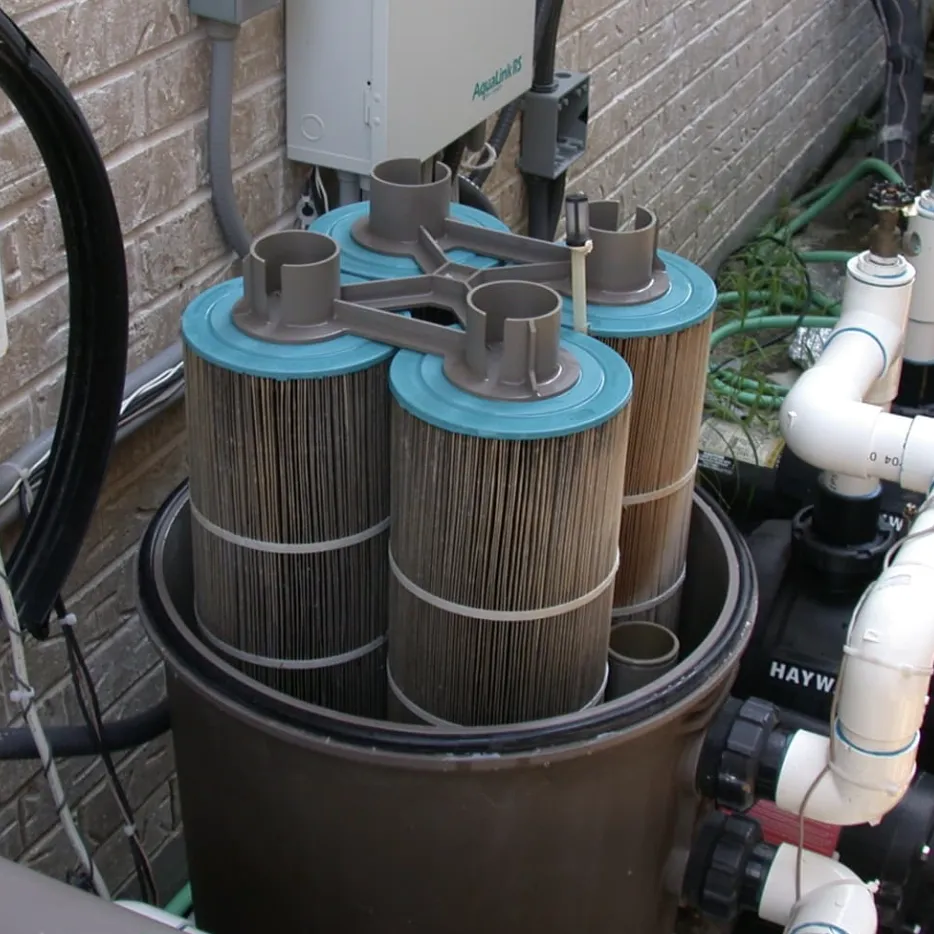
Cartridge Filters: Cartridge filters use a pleated fabric to trap dirt and debris. They are easy to maintain and provide excellent filtration, capturing particles as small as 10-15 microns.
Advantages:
Easy to clean and replace
Efficient filtration
Requires less water for cleaning
Disadvantages:
Needs frequent cleaning (every 2-4 weeks)
Shorter lifespan compared to other filters
Sand Filters: Sand filters use specially graded sand to trap particles. They are the most common type of pool filter due to their durability and low maintenance.
Advantages:
Long lifespan (5-7 years)
Easy to operate and maintain
Cost-effective
Disadvantages:
Requires backwashing, which wastes water
Less efficient at capturing small particles (20-40 microns)
DE (Diatomaceous Earth) Filters: DE filters use a fine powder made from fossilized algae (diatoms) to filter water. They provide the best filtration, capturing particles as small as 2-5 microns.
Advantages:
Superior filtration efficiency
Keeps water crystal clear
Long-lasting
Disadvantages:
More complex maintenance
Requires periodic backwashing and recharging with DE powder
Higher cost
Why Choose Triton Pools for Your Pool Filter Replacement in Phoenix, Arizona?
Triton Pools is your go-to solution for pool filter replacement in Phoenix. Here’s why:
Expertise: Our experienced technicians are knowledgeable about all types of pool filters and can help you choose the best one for your pool.
Quality Service: We provide professional installation and maintenance services, ensuring your pool filter operates at peak performance.
Customer Satisfaction: At Triton Pools, we prioritize customer satisfaction. We offer personalized service tailored to your specific needs.
Convenience: We handle everything from filter selection to installation, making the process hassle-free for you.
Conclusion
Knowing when to replace your pool filter is essential for maintaining a clean and healthy swimming environment. By understanding the signs of a failing filter and the differences between cartridge, sand, and DE filters, you can make an informed decision. When it’s time for a replacement, trust Triton Pools to provide top-notch service in Phoenix, Arizona. Contact us today to schedule your pool filter replacement and enjoy crystal-clear water all year round.

Phoenix's #1 Trusted
Pool professionals
WHERE EXCELLENCE IN POOLS MEETS UNPARALLELED SERVICE
Trustworthy
Locally Owned
Quality Focused
Financing Available

Connect With Us


